Helical Piers Underpin and Lift Residential Complex in Clearwater, FL
Challenge
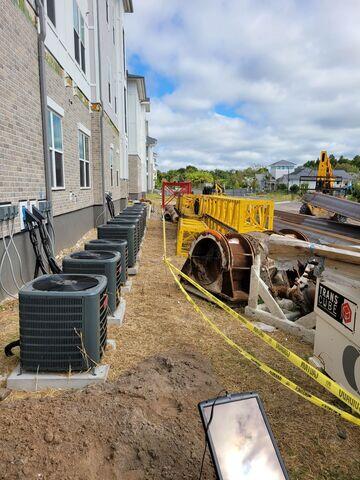
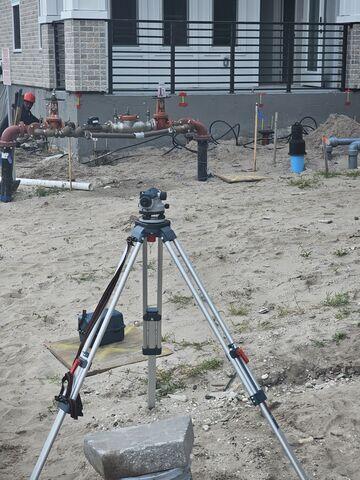
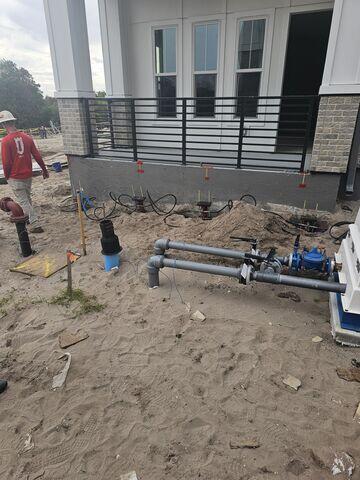
The Aventon Lana complex consists of 396 housing units in several buildings across a 22-acre site in Clearwater, FL. Building No. 8 experienced excessive settlement at the east end of the structure. This building is an approximately 10,000 square foot, three-story structure with a post-tensioned slab foundation. An elevation monitoring program was initiated in January 2023 at the eastern half of the structure, with slab elevation readings taken over an approximate 6-month period. The slab monitoring program showed that settlement was continuing. Two geotechnical soil borings were advanced near the east wall of the structure in July 2023 to document the soil bearing strengths near the building. The borings showed highly variable soil conditions with zones of very loose sand and organics intermixed in more competent bearing materials. Based on the elevation monitoring and soil boring results, it was determined that the settlement would continue unless a remedial method was initiated. The most cost-effective option was to underpin the east half of the building and possibly lift it back to its original elevation. After lifting, any voids under the slab would need to be filled to provide sufficient slab support. Existing AC units and underground utilities at the east wall would make it difficult for underpinning operations.
Solution
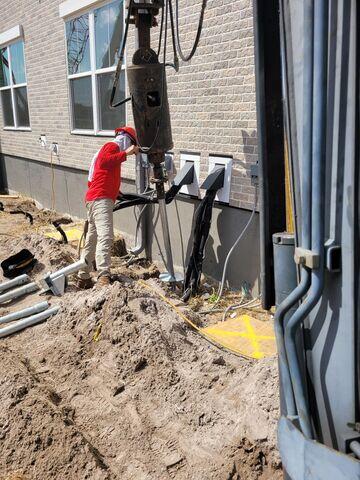
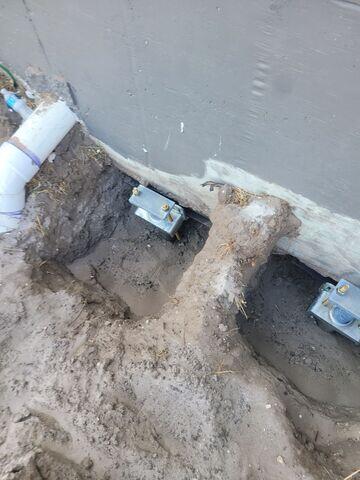
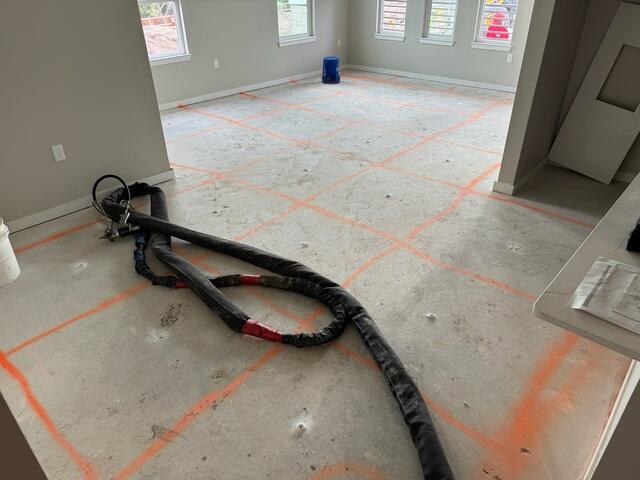
Helical piers were selected as the preferred solution for underpinning and lifting the structure back to its original elevation. Helical piers are often preferred over other deep foundation alternatives, given the ability to work around tight access areas, underground and overhead utilities, quick installation, and lower costs relative to other systems. Once the underpinning and lifting work was completed, the voids present under the slab would be filled with polyurethane foam. PolyLevel® polyurethane foam injection was selected as the preferred option based on cost-effectiveness, speed of repair, and the ability to use the facility immediately after placement of the material. PolyLevel® is a two-part urethane that expands into a rigid foam used to fill voids, stabilize slabs, and lift concrete. PolyLevel® can be injected below the concrete slab through 3/8-inch diameter drilled holes. Once the two parts are mixed, a chemical reaction converts the liquid urethane components into a strong, rapidly setting foam material. In its foam state, PolyLevel® is extremely light, with different formulations weighing between 2 to 4 pounds per cubic foot (pcf). Other void-filling or lifting materials can weigh upwards of 120 pcf, adding significant weight to the supporting soil or base materials and potentially contributing to further settlement. The final design included 36 helical pier underpinning locations along the east wall and portions of the north and south walls at the east end. The helical piers had maximum service compression loads of 25 kips and a factor of safety of two on the service load for a maximum ultimate capacity of 50 kips. The Model HP288 (2.875-inch OD by 0.276-inch wall) hollow round shaft helical pier with a 10”-12” helix plate configuration with V-style leading edges and standard retrofit brackets was specified. The helical piers were installed to an average termination depth of 35 feet after achieving a torque-correlated ultimate capacity of at least two times the service load. A structural lift was performed at the pier locations with a maximum lift of 9 inches. After the structural lift was performed, 3,057 lb of PolyLevel® PL400 polyurethane foam was injected under the slabs. The helical piers and polyurethane foam were installed over a period of about 12 days.
Project Summary
Structural Engineer: ECS
Geotechnical Engineer: ECS
Helical Pier Designer: FDN Engineering
Helical Pier Installer: LRE Foundation Repair
Products Installed: (36) Foundation Supportworks® Model 288 Helical Piers, Maximum Service Compression Loads of 25 kips, Average Installed Depth of 35 feet. 3,057 lb of Foundation Supportworks® PolyLevel® PL400H