

Why Homes in South Florida Experience Concrete Settlement
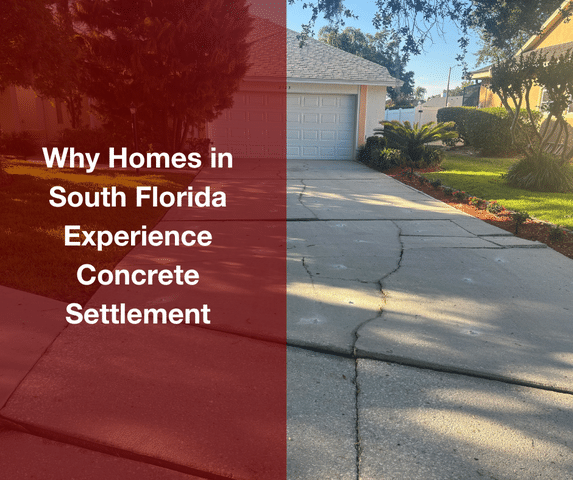
Concrete surfaces are to provide years of durability and stability, but many South Florida homeowners eventually notice cracks, uneven slabs, or sinking sections around their property. Whether it's a driveway that's become a tripping hazard, a sidewalk that's no longer level, or a pool deck that's beginning to sink, these issues are often signs of concrete settlement.
What Is Concrete Settlement?
Concrete settlement occurs when the soil beneath a slab shifts, compacts, washes away, or loses its ability to support the weight above it. As the supporting soil weakens, the concrete begins to sink or settle into the voids below. Contrary to popular belief, concrete itself is often not the problem. In many cases, the slab remains structurally sound, but the ground underneath no longer provides adequate support. Because concrete is heavy and rigid, even small changes in soil conditions can lead to noticeable sinking, cracking, and uneven surfaces.
Why Settlement Is Common in South Florida
South Florida's climate and soil conditions create a unique environment that can contribute to concrete settlement over time. The region experiences frequent rainfall, tropical storms, hurricanes, and fluctuating groundwater levels. These conditions constantly affect the soil beneath concrete slabs. When soil becomes saturated, erodes, or shifts due to water movement, empty spaces can develop beneath the concrete. Without proper support, the slab may begin to settle unevenly.
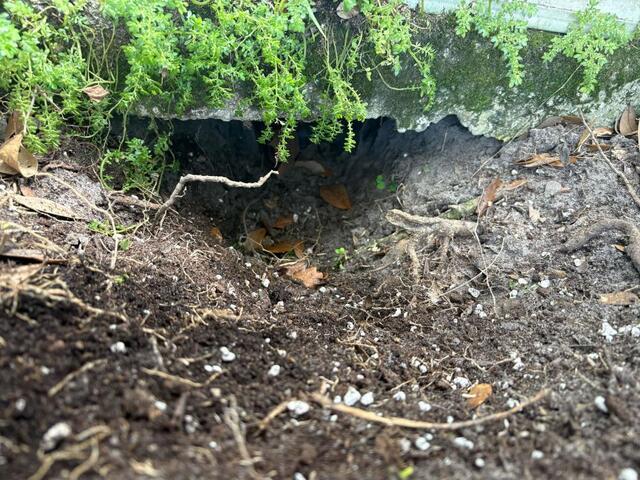
Additionally, many South Florida properties are built on sandy soils. While sand can provide excellent drainage, it can also be more susceptible to movement and erosion when exposed to large amounts of water. One of the leading causes of concrete settlement is soil erosion. Heavy rainstorms, irrigation systems, poor drainage, and hurricane-related flooding can gradually wash away soil from beneath sidewalks, driveways, patios, and pool decks. As water moves through the ground, it can carry fine soil particles with it, creating hidden voids beneath the concrete. These voids may remain unnoticed for months or years until the slab begins to sink. Some common sources of soil erosion include:
- Improper yard drainage
- Leaking water lines
- Downspouts discharging near slabs
- Excessive irrigation
- Flooding from tropical storms
- Hurricane season rainfall
Because the erosion occurs below the surface, homeowners often don't realize a problem exists until visible settlement appears. Driveways and sidewalks are among the most common areas affected by concrete settlement. Over time, homeowners may notice that sections of concrete become uneven or develop noticeable height differences between adjoining slabs. These changes not only affect appearance but can also create safety hazards for family members and visitors. Signs of sidewalk or driveway settlement include uneven concrete panels, trip hazards, cracks across the slab, water pooling after rain, and gaps beneath concrete edges. Because these surfaces are exposed to weather year-round, they are particularly vulnerable to soil movement and erosion beneath the slab.
Pool Deck Settlement
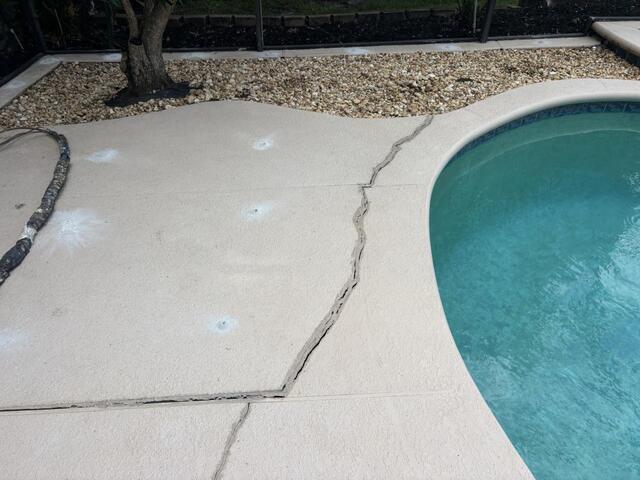
Pool decks face many of the same risks as sidewalks and driveways, but they are often exposed to even greater moisture levels. Splashing water, deck drainage, rainfall, and changes in groundwater conditions can all contribute to soil instability around a pool. As supporting soils shift or wash away, portions of the deck may begin to settle. This can create uneven walking surfaces around the pool and negatively impact the appearance of the outdoor living area. Pool deck settlement may also increase the risk of slips and falls, making prompt repairs important for both safety and aesthetics.
Why Concrete Replacement Isn't Always Necessary
When homeowners first see sinking concrete, many assume complete replacement is the only solution. Fortunately, that's often not the case. In many situations, the concrete slab itself remains in good condition. The real issue lies beneath the surface, where soil erosion or settlement has created unsupported areas. Removing and replacing concrete can be expensive, time-consuming, and disruptive. It also may not solve the underlying soil problem if proper stabilization measures aren't taken. Instead, modern concrete lifting technologies can often restore settled slabs by addressing the voids beneath them.
The Benefits of Concrete Lifting Solutions
Concrete lifting is designed to raise and stabilize existing slabs without the need for demolition. At LRE Foundation Repair, we offer a full line of concrete repair solutions to meet every need, including PolyLevel, our most in-demand solution. Using specialized materials and equipment, our technicians can fill voids beneath the concrete and carefully lift the slab back toward its original position. This process helps restore support while permanently improving the appearance and functionality of the surface. The benefits of concrete lifting and repair are vast, providing faster completion times, less disruption to the property, lower costs, improved safety, extended life of the existing concrete, and reduced downtime for concrete repairs. For many homeowners, lifting provides an efficient and cost-effective alternative to full slab replacement.
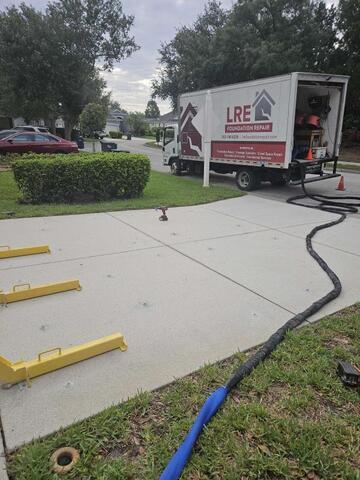
When concrete settlement occurs, it's important to identify the root cause before choosing a repair strategy. At LRE, we specialize in evaluating settled concrete and determining whether lifting solutions can effectively restore the affected surfaces. Our team understands the challenges created by South Florida's climate, soil conditions, and seasonal weather patterns. By addressing soil voids and stabilizing concrete slabs, professional concrete lifting services can help homeowners avoid unnecessary replacement costs while improving safety and curb appeal. Whether the issue involves a sinking driveway, uneven sidewalk, settling pool deck, or soil erosion beneath a slab, our experienced concrete repair professionals can recommend the most appropriate solution for the property's specific conditions. The sooner settlement is addressed, the easier it is to prevent additional movement and potential damage.
